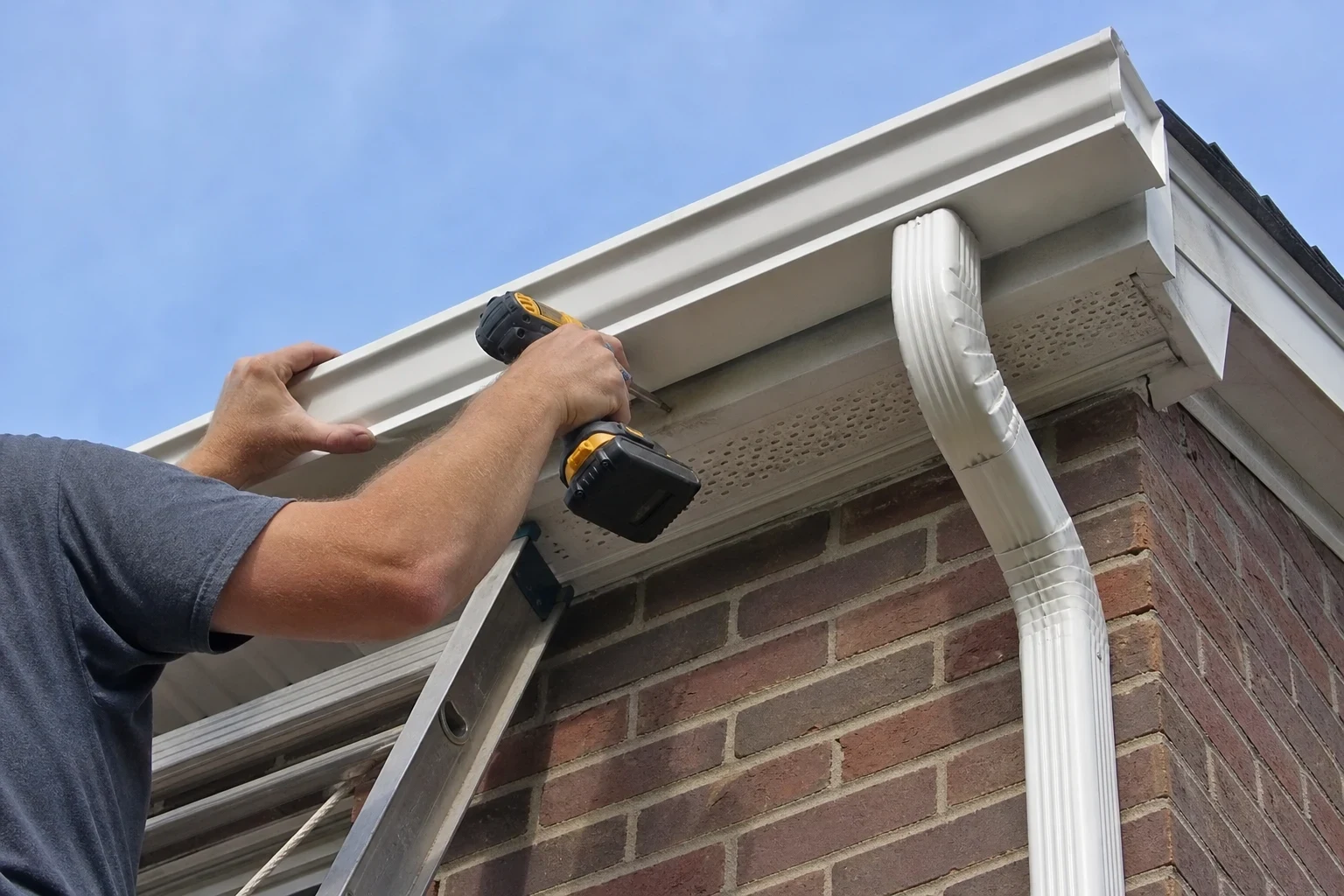
ServicesGutters
Gutter Repair and Installation in Wilder, Sized to Your Roof
Most gutter trouble is a symptom: wrong pitch, an undersized downspout, a missing drip edge or rotted fascia behind the hangers. We find which one it is, then repair or replace the system so water leaves your roof and lands away from your foundation.
Gutters Are the Last Step of Your Roof's Drainage
Every gallon that runs off your shingles has to go somewhere. Gutters collect it at the eave and the downspouts carry it to grade. When either part is wrong, the water spills behind the gutter onto the fascia, pours over the front onto your siding, or dumps beside the foundation where it soaks the soil and finds the basement.
We look at the whole path before recommending anything. An overflowing corner can mean a clog, a gutter pitched toward the wrong end, a valley sending more water than a 5-inch trough can take, or a downspout that is simply too small. Each one has a different fix, and replacing the gutter only solves one of them.
Northern Kentucky's freeze-thaw winters add their own load. Ice that forms in a sagging section is heavy, and it pulls hangers loose from the fascia a little more every season.
What Our Gutter Work Covers
Continuous-run aluminum gutters
We form each run from a coil of aluminum on site, so a long eave is covered by one piece instead of short sections lapped together. Joints only happen where the run turns a corner or stops, which leaves far less sealant exposed to sun and ice.
Correct pitch and hidden hangers
Every run is set with a slight fall toward its downspout, about a quarter inch of drop over each ten feet of length, so rain drains off instead of sitting in the trough. Hidden hangers screwed into the fascia grip the gutter tighter than old spikes and ferrules, which work loose over the years.
Downspouts sized to the roof area
We match downspout size and count to the square footage draining into each run. Steep or large roof planes often need 3x4 downspouts instead of the standard 2x3.
Fascia and drip edge checks
Before hanging anything we probe the fascia for soft wood and confirm drip edge or a gutter apron is there to carry water into the trough. If the board behind the gutter is rotted, new hangers will not hold.
Discharge away from the foundation
Extensions, splash blocks or rerouted outlets move water several feet out from the wall, where it can drain instead of pooling.
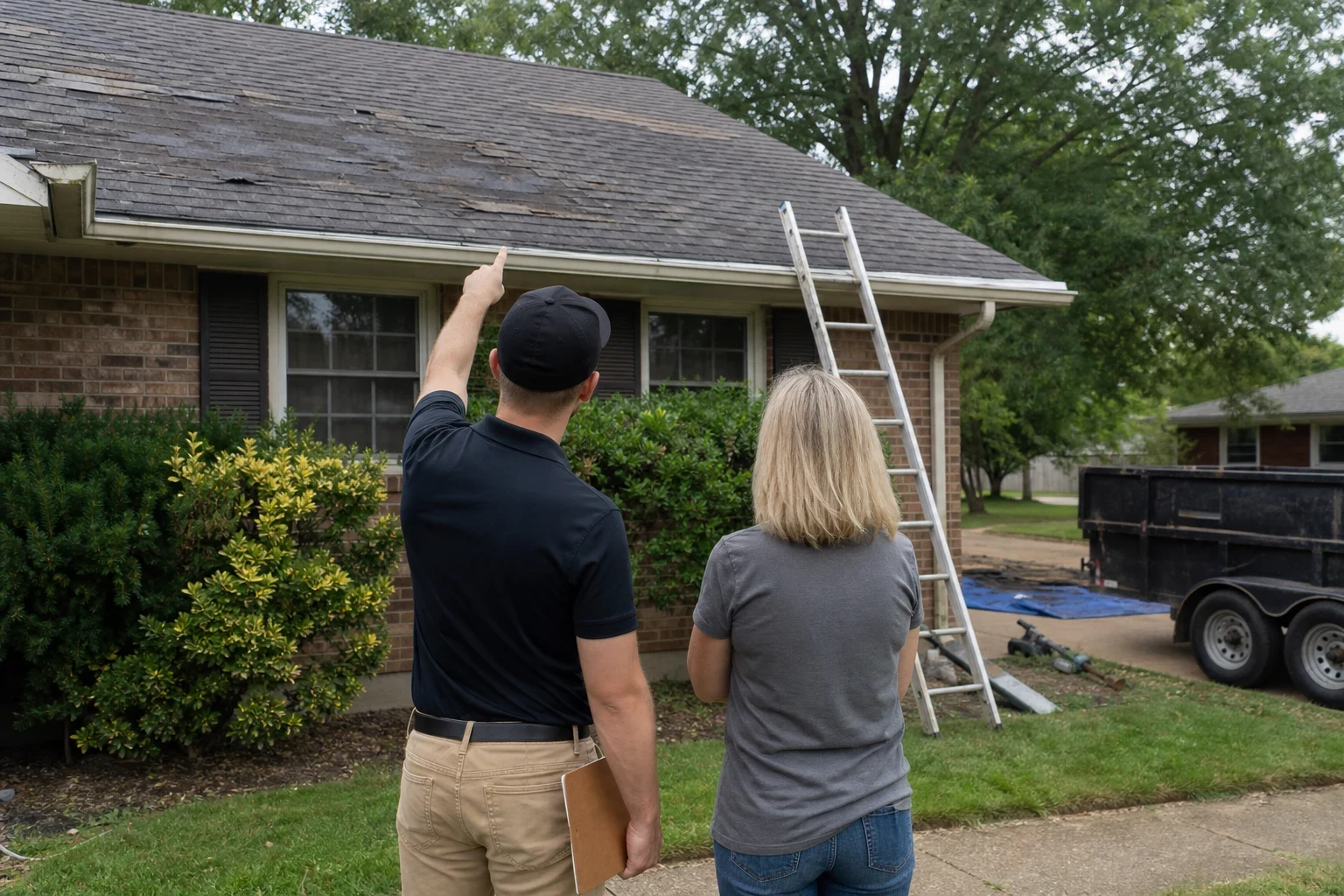
Signs Your Gutters Need Attention
- Water spilling over the front edge
- Overflow in a heavy rain points to a clog, an undersized gutter or a run pitched away from its downspout. We check which before deciding on a fix.
- Bowing runs and gaps at the fascia
- When a run bends down between its hangers, rain and ice collect in the low spot and add weight. The cause is usually loosened fasteners or fascia wood that has gone soft behind them.
- Stains or peeling paint below
- Dark streaks on the siding or flaking paint on the fascia board tell us runoff is slipping between the gutter and the house rather than dropping into the trough. That usually traces back to a missing apron or a gutter hung too low.
- Drips at seams and corners
- Failed sealant at end caps and miters lets water drip in one spot all storm long, often right at a doorway or window.
- Wet basement or eroded soil
- Washed-out mulch or a damp basement wall near a downspout says the water is landing too close to your home.
How a Gutter Job Runs
- 1
Free estimate and diagnosis
We walk the eaves, measure each run, check pitch with a level and look at the fascia, drip edge and downspout outlets. If we can, we run water through to watch where it actually goes.
- 2
Written findings and options
You get a line-by-line estimate that names the cause we found and what fixes it. When cleaning, resealing or rehanging will solve the problem, we say so instead of quoting a full replacement.
- 3
Installation day
We remove the old gutters, repair any soft fascia, then hang the new runs on hidden hangers and set the pitch. Downspouts and extensions go on last.
- 4
Water test and cleanup
We flush each run with a hose to confirm it drains to the outlet with nothing standing. Old gutters, screws and scrap leave with us, and the beds and driveway get a sweep.
How We Price a Gutter Job
Two things set most of the number: the footage of gutter to hang and the shape of the wood it hangs on. We measure on site and break the estimate into separate lines, so you see what each part costs before you decide.
- Length of eave and miters
- The footage of eave we cover drives most of the aluminum cost. Each inside or outside corner is cut, joined and sealed by hand, so a house with many turns takes longer than a simple rectangle.
- Gutter and downspout size
- Moving from 5-inch to 6-inch gutters or from 2x3 to 3x4 downspouts uses more aluminum but may be what your roof area needs.
- Fascia repair
- Rotted fascia has to be replaced before new gutters go up. We cannot know how much until the old gutter comes off, so we flag likely spots in the estimate.
- Height and access
- Two-story eaves, steep grades and decks or landscaping under the roofline take more setup time.
- Guards and extras
- Gutter guards, underground drain connections and extra extensions are priced as separate lines so you can choose.
Gutter Questions We Hear Often
- Do I need new gutters, or can mine be repaired?
- Often they can be repaired. Loose hangers, a failed end-cap seal or a misplaced outlet are small fixes. We recommend replacement when the trough is bent, badly corroded, undersized for the roof, or pieced together from short sections with many leaking seams.
- Should I go with 5-inch or 6-inch gutters?
- We work it out from the square footage feeding each run and the pitch of that roof plane, since a steeper slope sends water down faster. A 5-inch gutter handles most houses. Long runs, steep roofs and valleys that empty into a single corner are where it tends to overflow and a 6-inch trough earns its keep.
- Are gutter guards worth it?
- Under heavy tree cover they cut down on cleaning, especially with the leaf drop each fall. They do not make gutters maintenance-free, and a poorly fit guard can shed water over the edge in a downpour. We will tell you honestly whether your lot needs them.
- Can my gutters be replaced without touching the roof?
- Usually yes. If the drip edge is missing or the shingles end short of the gutter, we may suggest adding drip edge so water reaches the trough. Bigger shingle problems would be a separate roof repair conversation.
- Why does water get behind my gutter?
- Most often there is no drip edge or gutter apron, or the gutter hangs too low below the shingle line. Water clings to the underside of the roof edge and runs down the fascia. Correcting the height and adding flashing usually stops it.

Find Out Why Your Gutters Overflow
We will measure your runs, check the fascia and downspouts, and explain what is causing the problem before quoting a fix. Right now we also have an offer running: Limited Time — $50 Off Your First Service Call.