ServicesRoof Repair
Roof Repair in Wilder, Starting Where the Water Gets In
A stain on the ceiling rarely sits under the hole that caused it. We follow the water back to the failed part, such as a cracked pipe boot, open step flashing or a backed-out nail, and repair that part so the leak stops for good.
What Roof Repair Covers and When It Makes Sense
Roof repair fixes a specific failure on a roof that still has useful life left. That might be a few shingles torn off by wind, a chimney with flashing that has pulled away from the brick, a vent boot whose rubber collar has split in the sun, or a valley where granules have worn through to the mat. If the rest of the field shingles are flat, sealed and holding granules, a targeted repair is usually the sensible and cheaper choice.
The hard part is not the fix. It is knowing what to fix. Water enters at one point, runs along the top of the decking or down a rafter, and drips somewhere else entirely. A roofer who patches the spot above the stain often seals a sound area and leaves the real opening alone. We check the attic side and the roof side before we recommend anything, so the repair matches the cause.
When we find that the roof is near the end of its life, with widespread curling, brittle tabs or soft decking in several places, we will tell you plainly and walk you through what roof replacement would involve instead.
What Our Roof Repair Work Includes
- Leak tracing from both sides
- We look at the attic for water trails, dark sheathing and wet insulation, then match those to the roof surface above. This tells us whether the source is uphill of the stain and by how much.
- Flashing repair and replacement
- Step flashing along walls, counter flashing at chimneys and apron flashing at dormers are the most common leak points we see. We reseat or replace the metal and set it so it sheds water, rather than relying on a bead of caulk that will crack after a couple of winters.
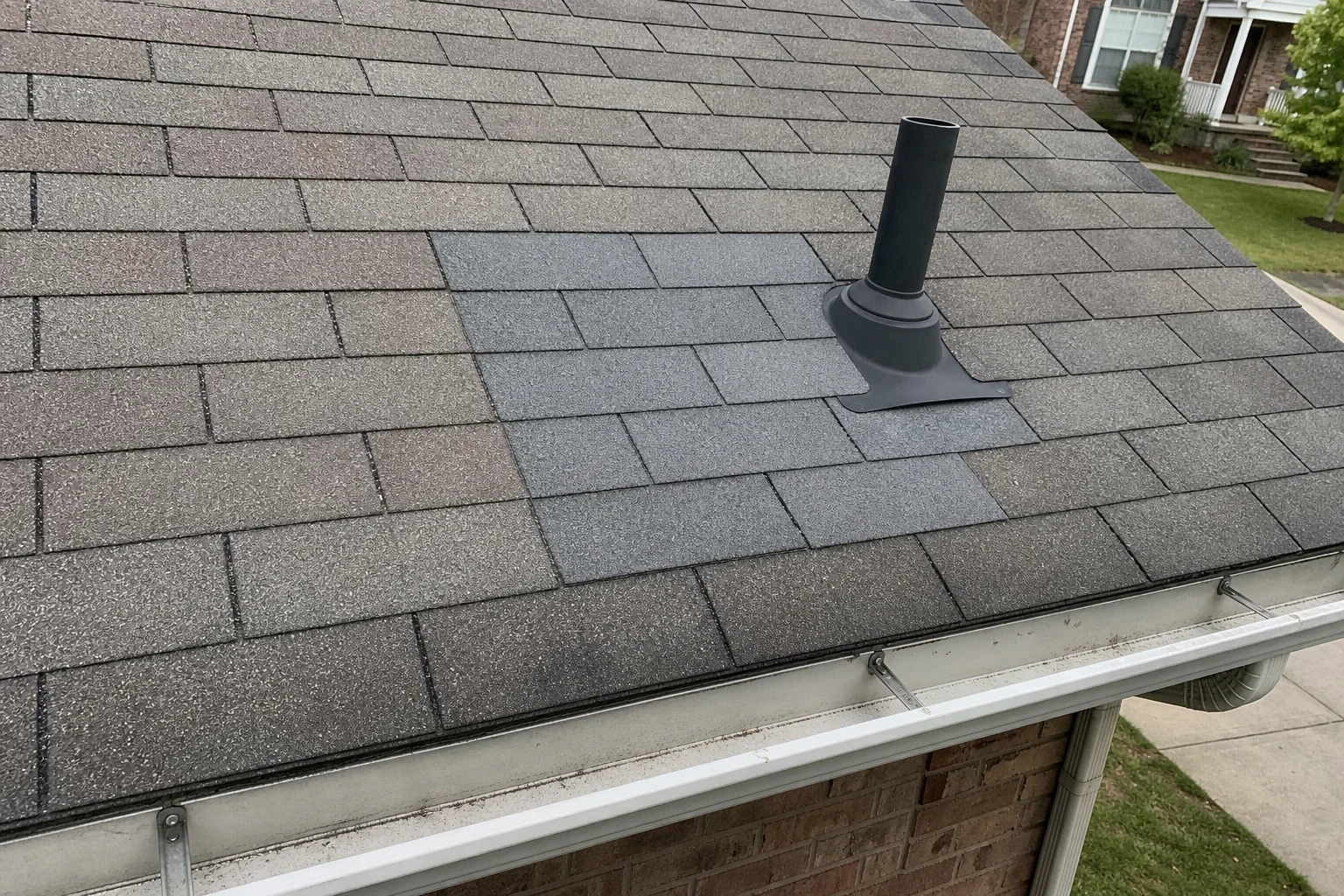
- Pipe boots and roof vents
- Rubber pipe collars dry out and split, letting water run down the vent stack. We replace the boot and check the shingles around it for water damage.
- Shingle replacement
- We break the seal on the courses above, pull the damaged shingles and fasten new ones in the nailing strip with a full set of nails. Before we order, we look for the closest color and shape still being made, and if an exact match no longer exists, you hear that from us before any work starts.
- Rotted decking cut out
- When water has sat on the sheathing long enough to rot it, the wood flexes underfoot and stops holding nails. We cut that section back to solid framing, fit new decking and then reshingle. Covering soft wood only moves the problem.
- Photos of what we found
- You get pictures of the failed part before we touch it and after the repair, so you can see what caused the leak and what was done.
When a Roof Repair Is Due
Water marks inside
A tan or brown ring on drywall tells you water has made it past the roof. Marks near an outside wall or a chimney are common. If the ring only spreads during hard, sideways rain, the flashing is a likelier suspect than the shingles themselves.
Missing or creased shingles
Strong gusts can lift tabs and break the sealant strip, leaving a crease line across the shingle. A creased shingle no longer lies flat, and the next storm often tears it off.
Drips in the attic after a cold snap
Frost that forms on the underside of the decking and then melts can look like a leak. So can ice dams at the eaves. Telling these apart is part of our diagnosis, because the fix for each is different.
Shingle grit collecting at the downspouts
A new roof sheds loose granules for a while, and that is expected. On an older roof, a heavy layer of grit in the gutter trough or at the downspout outlets means the asphalt underneath is exposed to sun and aging fast, especially in valleys where water concentrates.
Nail heads pushing through
Freeze-thaw cycles can back nails out of the decking until they lift the shingle above them. Each raised nail is a small opening for water.
What Affects the Cost of a Roof Repair
Repair pricing depends on what failed and what it takes to reach and replace it properly. We give you the price after the diagnosis, in writing, before any work starts. If this is your first time working with us, mention this on the call: Limited Time — $50 Off Your First Service Call.
The part that failed
Replacing a pipe boot is a small job. Rebuilding chimney flashing with new step and counter flashing takes more time and material.
Damage under the shingles
If water has soaked the decking, that section has to come out and be replaced. We cannot know the full extent until the shingles are lifted, so we explain this possibility beforehand.
Slope and height
A steep pitch or a two-story eave calls for harnesses, roof jacks and more careful footing. Each of those adds time to the job.
Shingle availability
Older or discontinued shingle lines can be harder to match, which may affect the material choice and cost.
How a Roof Repair Visit Runs
- 1
Phone call and scheduling
You describe the symptom and the room it shows up in. We agree on a day for your free estimate visit, and we ask about any past repairs so we know what to look for.
- 2
Diagnosis on site
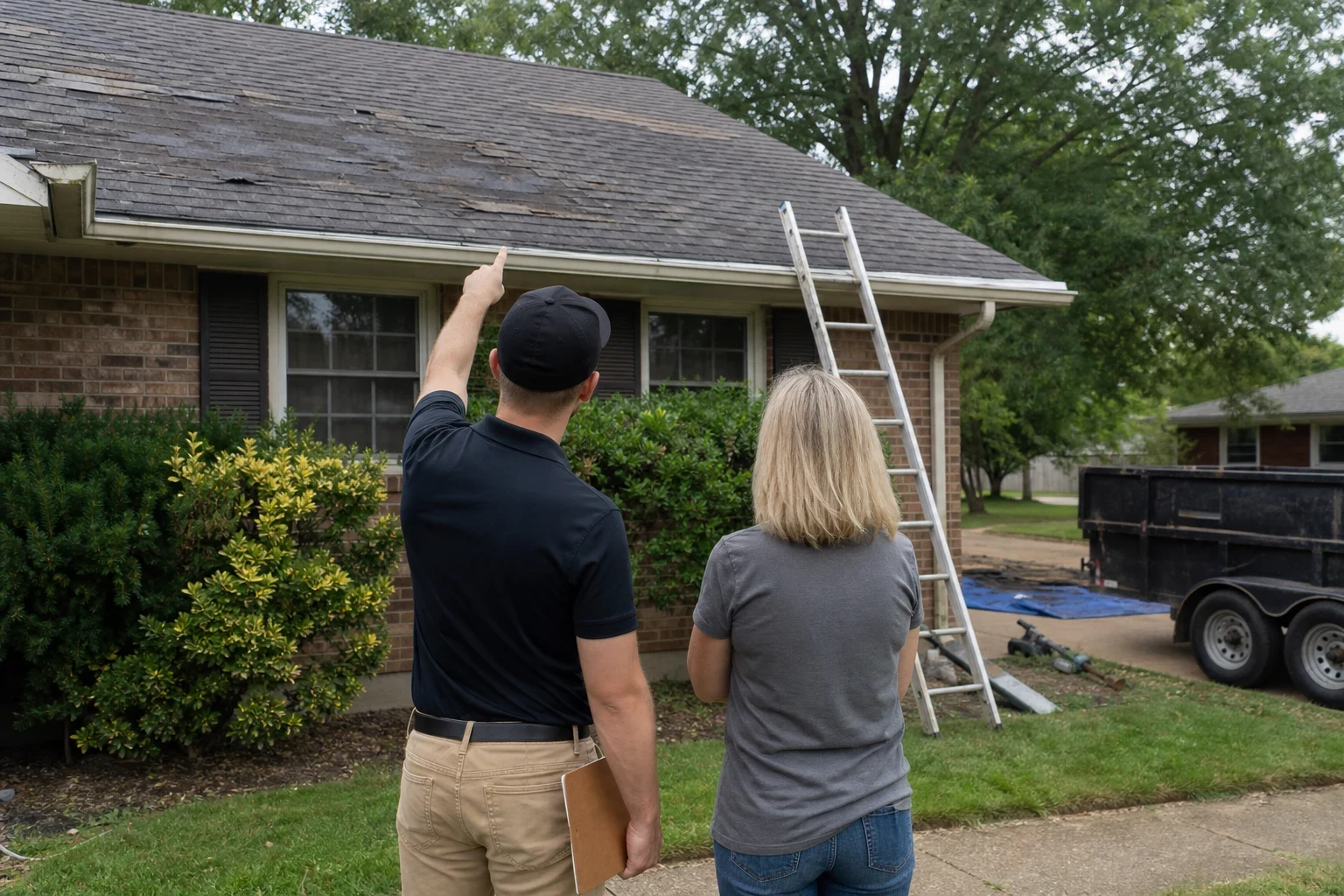
We check the attic, then go up on the roof and examine the flashing, vents, valleys and shingles above the problem area. When the cause is not obvious, we keep looking rather than guess.
- 3
Explanation and written estimate
We show you the photos, name the failed part and explain why it failed. The estimate lists the work line by line, so you know exactly what you are paying for.
- 4
The repair, then the yard
A typical repair wraps up in one trip. Tarps go over shrubs and beds under the work area before we start, the torn-off material leaves with us, and a rolling magnet goes over the lawn and driveway to pick up loose nails.
Roof Repair Questions We Hear Often
Is a repair enough, or is my roof past saving?
Most leaks on a roof with life left can be repaired. We base the answer on what we find: shingle flexibility, granule coverage and decking condition. If replacement is the better value, we will say so and explain why, but we do not push it when a repair will hold.
Why did my last repair not stop the leak?
Usually because the patch went over the stain instead of over the source. Water can travel several feet along the decking or a rafter before it drips. We trace it back from the attic side before deciding where to work.
Will new shingles match my existing roof?
We look for the nearest brand, color and shape still on the market. On an older roof, weathering means the new shingles may look a shade different until they age in. You will know what to expect before we start.
Can roof repairs be done in winter?
Many can. Shingles need warmth for their sealant strips to bond, so in cold weather we hand-seal tabs with roofing cement. Flashing and pipe boot work is far less sensitive to temperature.
Will my insurance pay for the repair?
Insurance generally covers sudden damage, such as wind or hail, and not wear from age. If a storm caused the problem, our Storm Damage Repair page explains how we document it. We can share our photos and findings, but the adjuster makes the coverage decision.
Put a Name to the Part That Failed
We track the water to its entry point, show you the photos and put the repair price on paper before anyone picks up a tool. If loose or clogged gutters turn out to be the culprit, our Gutters work covers that as well.