ServicesRoof Replacement
Roof Replacement in Wilder, Diagnosed Down to the Deck
A new roof should solve the problem that ended the old one. We check the shingles, decking, flashing and attic ventilation before we recommend replacement, then build a complete roof system on your home that addresses what actually failed.
When Replacement Is the Right Call
Most roofs do not fail all at once. Shingles lose granules, the asphalt dries out, and the mat underneath starts to crack. A repair makes sense while the field of the roof is still sound. Once the shingles are brittle across every slope, patches stop holding because the shingles around them break when they are lifted.
Before we price a replacement, we look for the cause. Premature curling often points to a hot attic with blocked soffit vents. Rot along the eaves usually means ice damming, which Northern Kentucky's freeze-thaw winters produce on poorly vented roofs. If we replace the shingles and leave those conditions alone, the new roof ages early too.
If a roof repair or a targeted fix will hold, we will say so. When it will not, you get a written explanation of why, with photos of what we found.
What a Replacement Includes
- 01
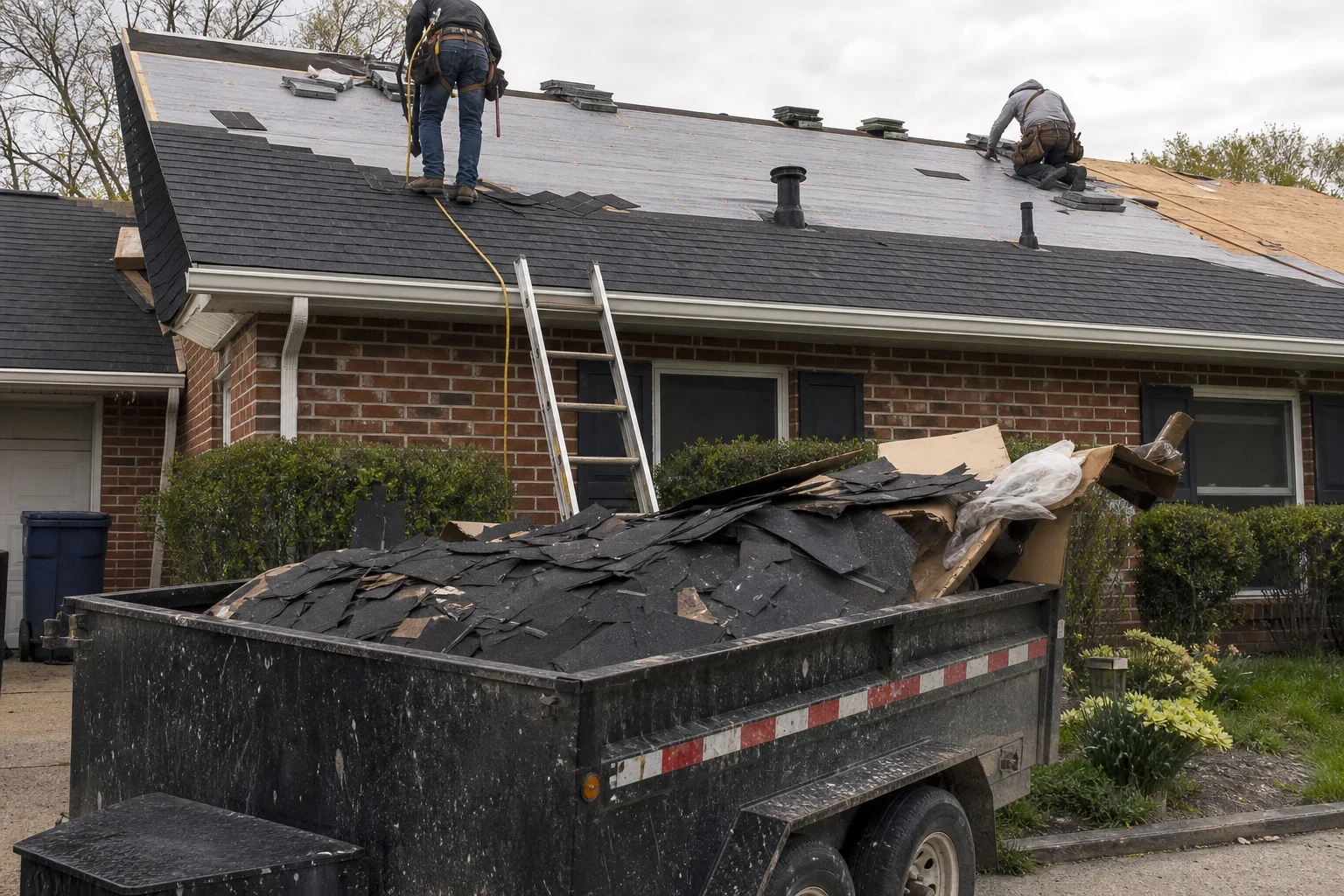
Full tear-off to the deck
Every old shingle and every sheet of felt comes off until only bare sheathing is left. Roofing over an existing layer hides rot and adds weight to the framing.
- 02
Decking repair
We walk the bare deck and replace sheathing that is soft, delaminated or water-stained through. You see photos of each section before it is changed.
- 03
Ice and water shield where water collects
Self-adhering membrane goes along the eaves and in the valleys, where melting snow backs up under shingles. Synthetic underlayment covers the rest of the deck.
- 04
New flashing and drip edge
Step flashing at walls, counterflashing at chimneys and new pipe boots replace the old metal and rubber. Reusing tired flashing is one of the most common reasons a new roof leaks.
- 05
Attic airflow sized to the roof
Soffit intake is sized so it can feed the ridge vent, giving air one steady path up through the attic. That airflow keeps the deck cooler in July and the roof surface cold in January, which is what keeps ice dams from forming.
- 06
Cleanup and magnet sweep
Debris goes straight into a dumpster or trailer, and we run a magnetic sweeper over the lawn, beds and driveway for loose nails.
Questions about Roof Replacement?
Call(859) 354-2529Signs Your Roof Is Due for Replacement
Granules in the gutters
A heavy layer of dark grit in the gutters or at downspouts means the shingles are shedding their protective surface. Bare asphalt breaks down quickly in sun.
Curled or cupped shingles
Edges lifting up or centers sinking show the shingles have lost flexibility. Wind gets under them easily after that.
Leaks in more than one place
One leak can be a flashing problem. Stains appearing in several rooms usually mean the underlayment has failed across the roof.
A soft or wavy roofline
Dips between rafters suggest wet, weakened decking. That needs to be opened up and replaced, not covered.
Trouble showing up in the attic
Sky visible between boards, sheathing gone dark and blotchy, or frost collecting on the nail points in midwinter all mean air and water are reaching wood they should not. Any of these is a good reason to set up a free roof inspection.
How the Job Runs
- 1
Inspection and attic check
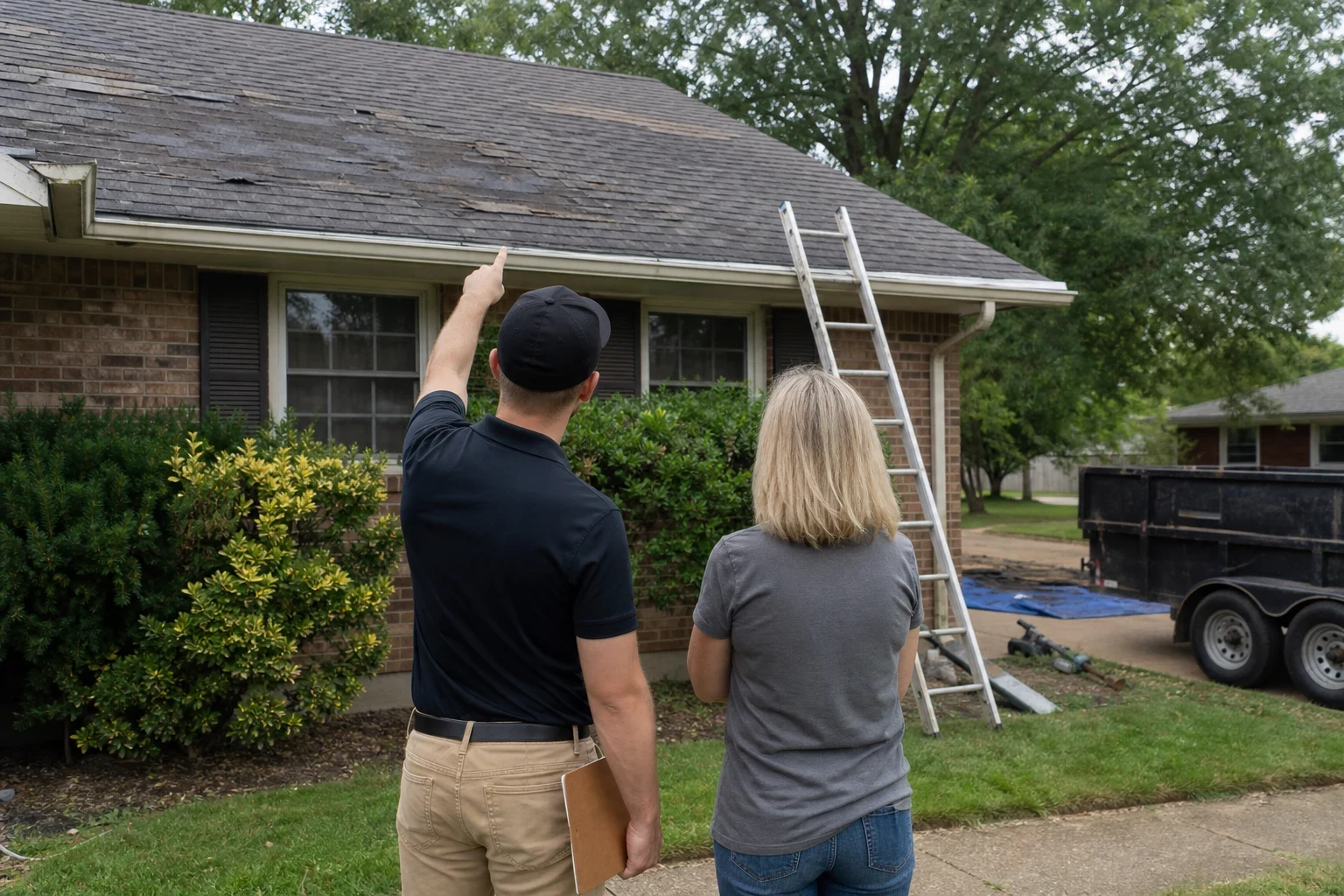
We go on the roof and into the attic, measure the slopes and note the vents, flashing and deck condition. This is where we find the cause, not just the symptoms.
- 2
Written estimate
The estimate breaks materials, tear-off, flashing and ventilation into separate lines and states up front how any decking replacement is charged. We go over shingle options with you and pull the permit where your city requires one.
- 3
Tear-off and deck repair
We protect shrubs, siding and windows, strip the roof one section at a time, and fix the decking. Exposed areas are dried in before we leave each day.
- 4
Installation
The layers are installed from the eaves up: membrane, underlayment, drip edge, flashing, shingles and finally the ridge vent. Every shingle gets the nail count and placement its maker specifies, because the wind rating on the bundle depends on that fastening.
- 5
Cleanup and walkthrough
After the sweep, we walk the finished roof with you and hand over photos from each stage.
What Moves the Price
Every roof is priced from its own measurements and conditions, so we do not quote from a table. These are the items that change the number most. Your estimate lists each one separately so you can see where the money goes.
- Size and pitch
- Total square footage sets the material order. Steeper slopes need more safety setup and slow the crew down.
- Layers to remove
- A second or third layer of old shingles adds tear-off labor and disposal weight.
- Decking condition
- Rotted sheathing has to be replaced before anything goes over it. We price it per sheet and show you the damage first.
- Details and penetrations
- Chimneys, skylights, valleys, dormers and added ventilation each add flashing work and time.
- Shingle choice
- Standard architectural shingles and heavier impact-rated lines differ in cost, weight and expected service life.
Roof Replacement Questions
Is it okay to lay new shingles on top of the roof I have now?
We advise against it. A second layer covers the decking, so any soft or rotted sheathing stays hidden under the new shingles. The extra layer also holds heat against the roof and puts more weight on the rafters. Stripping to the deck is the only way to see what wore out the old roof and correct it.
How long does a replacement take?
Many homes are done in one to two days. Steep pitches, multiple layers, extensive decking repair or a lot of chimney and dormer flashing can stretch that. We give you a realistic schedule in the estimate and let you know if weather moves it.
What if you find bad decking once the shingles are off?
We photograph it and show you before we replace anything. The estimate states the per-sheet price ahead of time, so the final cost is not a surprise.
Will insurance pay for a new roof?
It depends on your policy and whether the damage came from a covered event like hail or wind. Our part is to photograph the roof and tell you plainly which damage we believe a storm caused and which is ordinary wear. The coverage decision belongs to your adjuster. If a storm is involved, our storm damage repair page covers that process in more detail.
Do I need to be home during the work?
No, but someone should be reachable. Expect noise and vibration inside, so take down loose items on walls near the roofline. Keep vehicles out of the driveway until the sweep is finished.
Find Out What Your Roof Really Needs
Ask about our current offer when you reach us: Limited Time — $50 Off Your First Service Call. We will check the deck, flashing and ventilation, tell you whether replacement is warranted, and put the full scope in writing.