ServicesSiding
Siding Repair and Replacement in Wilder
Buckled, cracked or loose siding usually has a cause behind it: a missing kick-out flashing, nails driven too tight, or water running down a wall from an overflowing gutter. We find that cause first, then repair or replace the siding so the problem stops.
Siding Work That Starts Behind the Panel
Siding is a rain screen, not a waterproof skin. Water gets behind every system. The housewrap, flashing and sheathing underneath decide whether that water drains out or soaks into the wall. When a panel warps or a stain spreads, the visible damage is often the last thing to show up.
We pull suspect panels, check the sheathing with a probe and a moisture meter, and trace where the water came from before we write a price. Sometimes the answer is two courses of vinyl and a new J-channel. Sometimes it is a full wall with new wrap. You get the reason either way, in plain terms.
Because we also handle roofing and gutters, we look at where the roof meets the wall. Step flashing and kick-out flashing failures cause a large share of the siding rot we open up.
What Our Siding Service Covers
- Panel and course repair
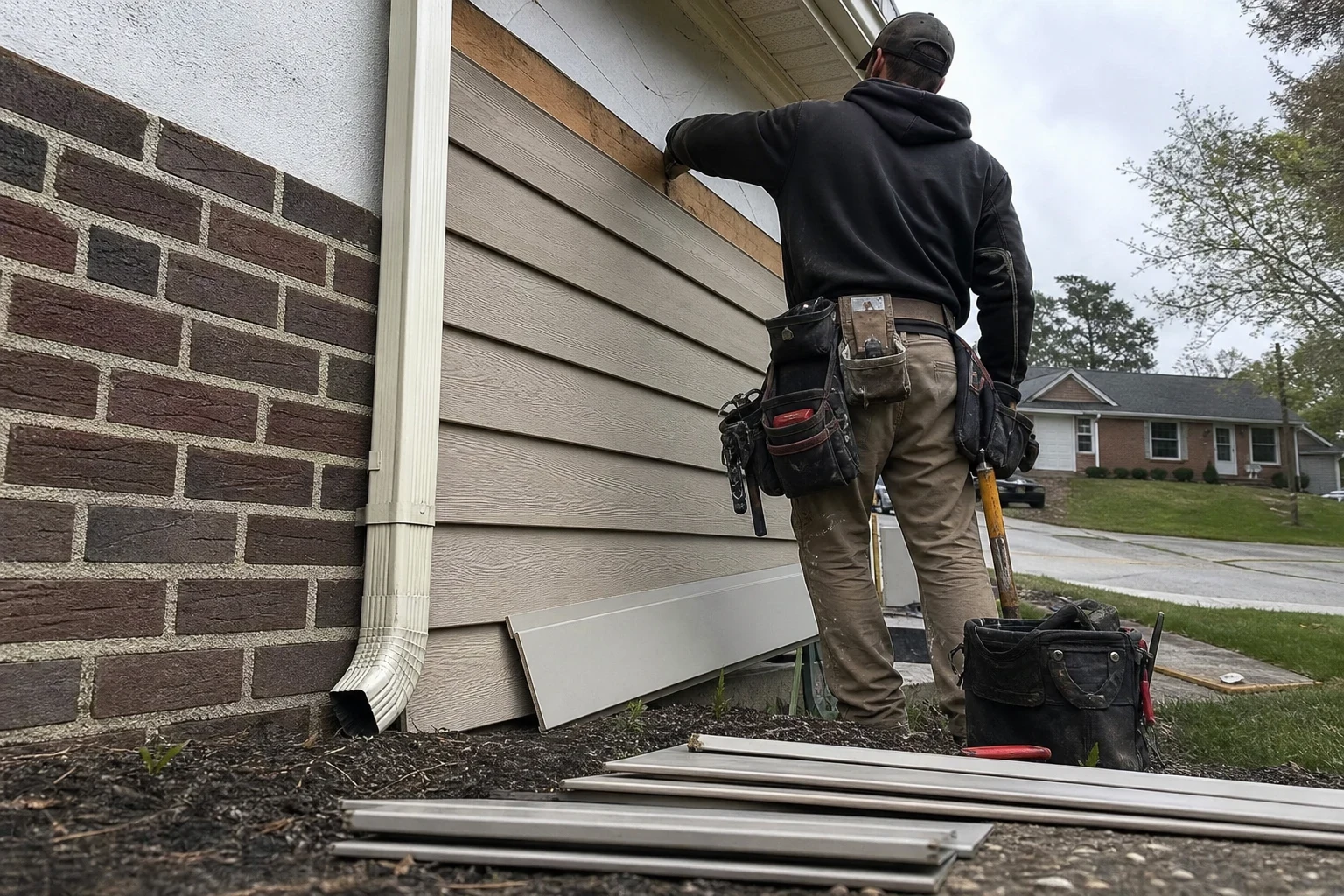
- We replace cracked, dented or blown-off vinyl, fiber cement and wood pieces, unlocking the courses above so the new panels seat properly.
- Full siding replacement
- When a wall or the whole house needs new siding, we strip to the sheathing, repair what is soft and install a new system from the starter strip up.
- Sheathing and housewrap
- Rotted OSB or plank sheathing gets cut out and replaced. We lap the weather-resistive barrier shingle-style so water drains down and out, never behind the layer below.
- Flashing at openings and roof lines
- We install or correct window head flashing, J-channel, and kick-out flashing where a roof edge dies into a sidewall. That last piece keeps runoff from dumping straight into the wall.
- Trim, soffit and fascia tie-in
- Corner posts, frieze boards and soffit edges are fitted so the siding terminates cleanly and gaps are sealed.
When Your Siding Is Telling You Something Is Wrong
Ripples or bowing in vinyl
Vinyl panels grow and shrink as the temperature swings. A panel nailed hard against the wall instead of hung loose in its slot has nowhere to go, so it bows on hot days. Often we can fix it by refastening.
Cracks after a cold snap
Vinyl turns brittle in freezing weather, and a hit from hail, a ball or a mower stone can split it. Cracks let wind-driven rain reach the wrap.
Soft spots or staining below a roof line
Dark streaks or spongy siding under where a roof meets a wall usually point to missing kick-out flashing. Water has been entering for a while.
Peeling paint on wood siding
Paint that blisters and peels in the same spots each year often means moisture is pushing out from behind, not a bad paint job.
Panels loose or missing after wind
Strong gusts can unlock a course, and once one panel goes the ones above follow. Check our Storm Damage Repair page if a storm caused it.
What Moves the Price of Siding Work
Siding cost depends less on the panels than on what we find behind them. A repair confined to a few courses is a small job. The same visible damage over rotted sheathing is a bigger one. That is why we open the wall during the free estimate.
Wall area and height
Square footage drives material and labor. Second-story and gable walls need more staging and take longer.
Siding material
Vinyl, fiber cement and wood differ in cost, weight and how they are cut and fastened. Fiber cement also needs painted or prefinished trim.
Condition of the sheathing
Soft or delaminated sheathing has to be cut out and replaced before anything new goes on. We show you photos of it first.
Openings and flashing details
Each window, door, dryer vent and spot where a roof meets a wall gets its own flashing and trim pieces. A wall broken up by lots of openings takes more cutting, fitting and material than an unbroken stretch.
Color and profile matching
Older or discontinued panels can be hard to match for a partial repair. When that happens, we may relocate sound original pieces to the wall people see from the street and use new stock where it will hardly be noticed, which adds some labor.
How a Siding Job Runs
- 1
Inspection and diagnosis
We walk every elevation, remove a test panel where damage shows, probe the sheathing and take moisture readings. Gutters, downspouts and roof-to-wall flashing get checked too.
- 2
Written estimate with photos
You see what we found and why it happened. The estimate lists panels, sheathing, wrap and flashing as separate lines, plus whether repair or replacement makes more sense.
- 3
Prep and protection
We move what needs moving, cover plants and AC units along the work wall, and lay tarps to catch nails and old material.
- 4
Removal, repair and install
Old siding comes off, damaged sheathing is replaced, then wrap and flashing go on before new siding. Vinyl is nailed in the center of the slot with room to move.
- 5
Cleanup and walk-around
We haul debris, run a magnet across the yard and driveway for nails, and walk the finished walls with you.
Siding Questions We Hear
Will a repaired section stand out from the rest of my siding?
That depends on the age and color of what you have. We identify the profile, exposure and maker when we can. Sun-faded vinyl rarely lines up perfectly with fresh stock, so we may take original pieces from a hidden wall for the visible repair and fill that hidden spot with new material.
Should I repair or replace my siding?
If the damage is limited and the sheathing behind it is sound, repair is usually the right call. If moisture has spread across a wall or the siding is brittle throughout, patching tends to fail again. We tell you which one fits after we look behind the panels.
Can new siding go over the old siding?
We advise against it. Covering old siding hides any rot underneath and makes proper flashing at windows nearly impossible. We strip to the sheathing so we can see and fix what is there.
Is hail or wind damage to siding covered by insurance?
Many homeowner policies cover sudden storm damage, but your adjuster and your policy make that call. We photograph each damaged wall, note which sides of your home took the hit and walk you through it. That way you start the claim with a record in hand, and we stay out of the adjuster's role.
How long does a siding job take?
A repair of a few courses is usually done in a day. A full house depends on size, height and how much sheathing needs replacing. We give you a working estimate of days with the written quote.
Find Out What Is Behind Your Siding
We will open the wall, find the cause and lay out repair or replacement options in writing. First-time customers can also use our offer: Limited Time — $50 Off Your First Service Call.