ServicesStorm Damage Repair
Storm Damage Repair in Wilder, Built on What the Storm Actually Hit
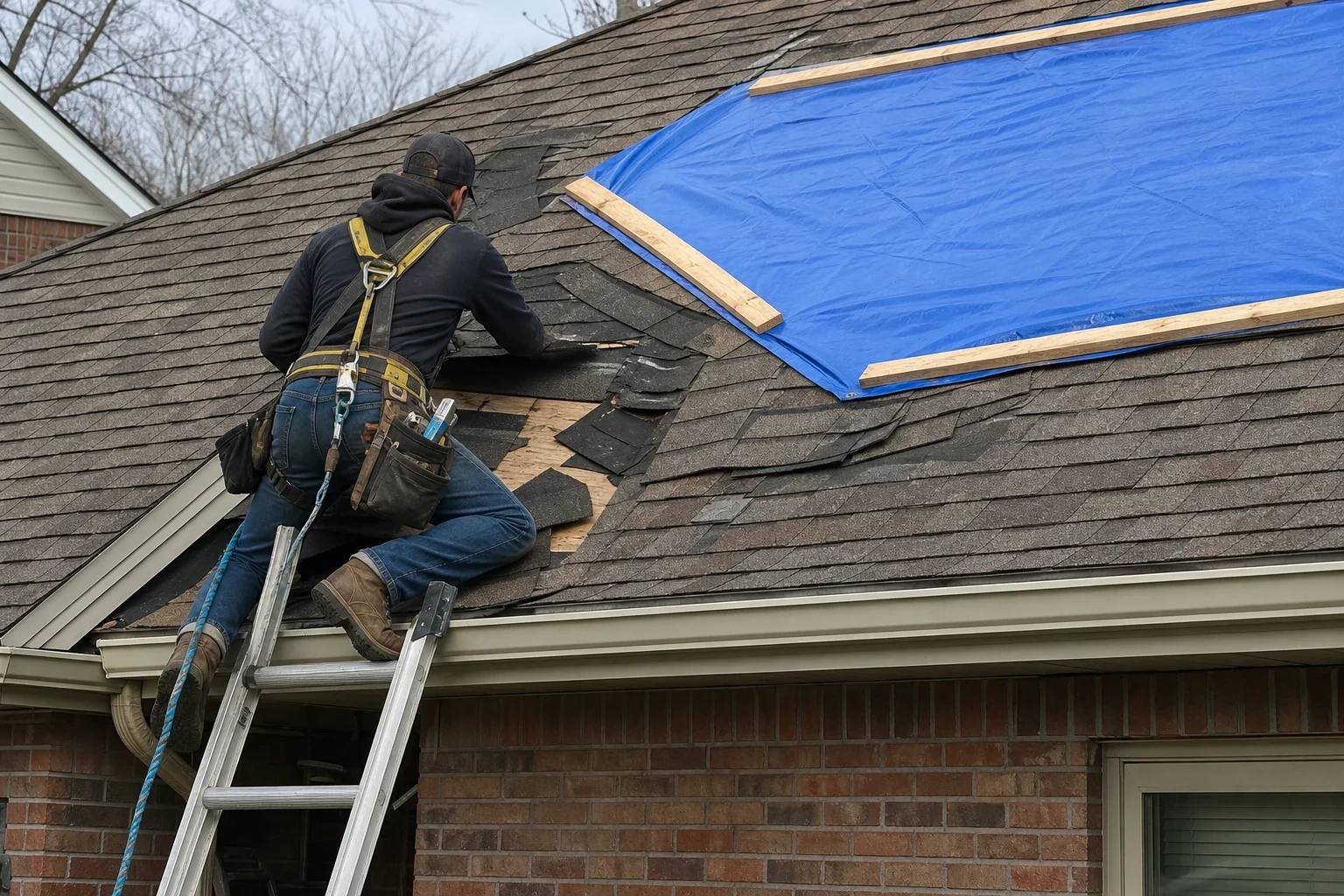
Hail and wind damage is often hard to see from the yard. We walk the whole roof, mark every bruised shingle, creased tab and dented vent, photograph it, and repair the real damage so a hidden break does not turn into a leak next season.
What Storm Damage Repair Covers
Storm damage repair means fixing what a specific weather event broke: shingles torn or lifted by wind, asphalt mats fractured by hail, flashing bent loose, and the gutters, vents and siding that took hits along the way. The work is different from fixing an old roof that is simply wearing out, and the difference matters to your repair plan and to any insurance claim.
That is why we start by finding the cause. A missing granule patch can be a hail strike or plain age. A lifted shingle can be wind, or it can be a nail driven too high at install. We tell you which is which, show you the photos, and price the repair around what we actually found.
Northern Kentucky gets its share of spring hail and summer straight-line wind, and a roof can look fine from the driveway after both. If you are not sure anything happened up there, a free roof inspection is the simplest first step.
What the Work Includes
- 01
Full roof walk and test squares
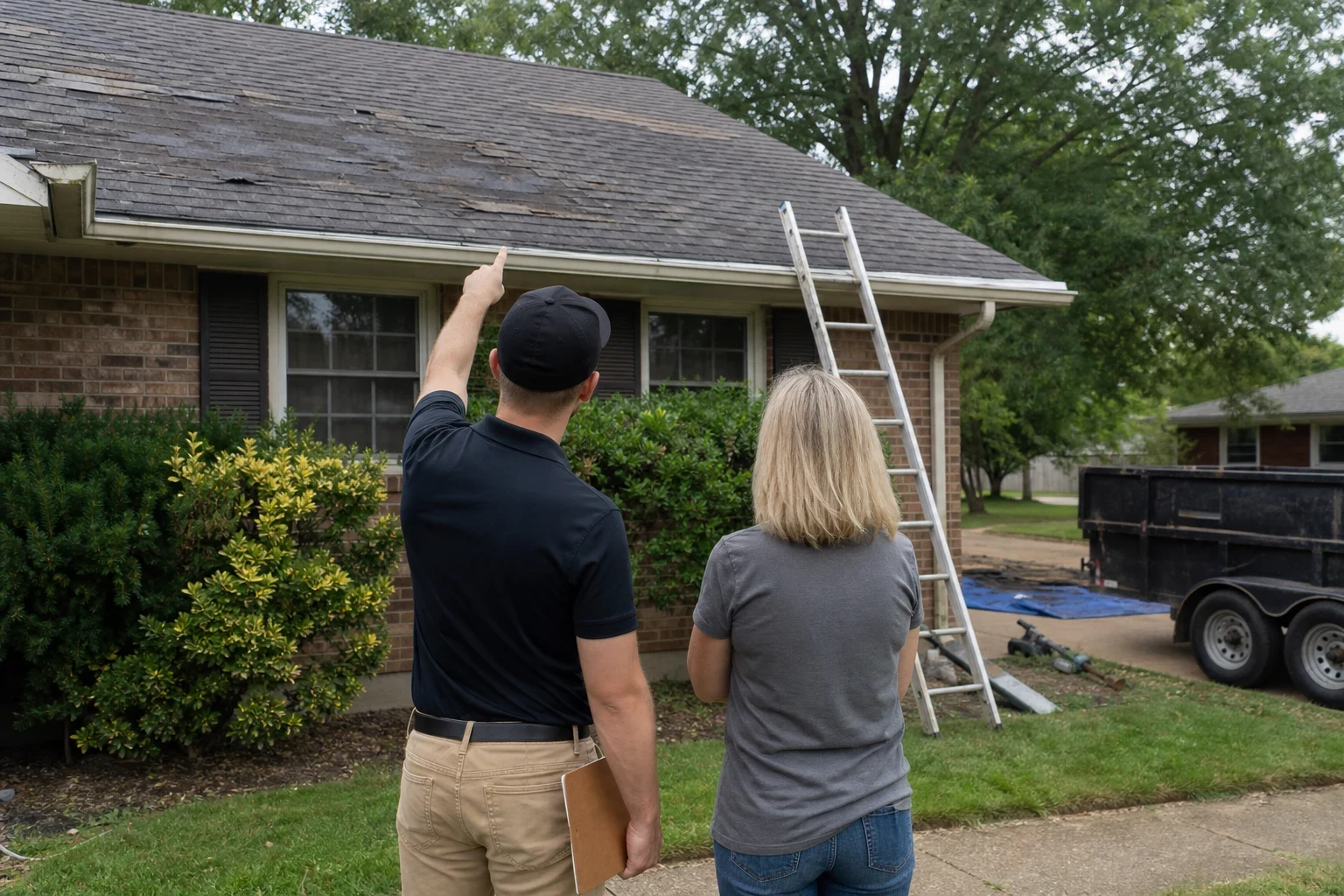
We check every slope, not just the side facing the storm. On each slope we look for hail bruises you can feel as soft spots, fractured mats, granule loss with exposed asphalt, and creases at the top of wind-lifted tabs.
- 02
Photo documentation
Each damaged area is photographed with a marker or chalk circle for scale. You get the photos along with a written, line-item estimate, which is useful whether or not you file a claim.
- 03
Shingle and tab replacement
Creased or torn shingles are removed and replaced, not glued down. A creased tab has lost its sealant bond and will lift again in the next wind.
- 04
Flashing, vents and pipe boots
Step flashing, chimney flashing, drip edge, box vents and rubber pipe boots are checked for dents, cracks and gaps. Bent metal and split boots are replaced so water cannot track in behind them.
- 05
Gutters and siding damage
Hail dents gutters and downspouts and can crack vinyl siding panels. We note these with the roof findings and can handle the fix through our gutters and siding work.
- 06
Decking check where needed
Where a leak has already reached the wood, we check the plywood or OSB decking for soft spots and replace any section that will no longer hold a nail.
Questions about Storm Damage Repair?
Call(859) 354-2529Signs Your Roof Took Storm Damage
Granules in the gutters or downspout splash
A heavy pile of dark grit after a hailstorm usually means granules were knocked off the shingles. Once that layer is gone, the exposed asphalt breaks down quickly under UV.
A whole shingle on the lawn or driveway
For wind to tear a shingle free, it first had to break the adhesive strip holding it down. The shingles on either side have usually been loosened as well.
Round marks on gutters or the AC unit
If hail left round marks in your aluminum gutters, downspout elbows or the fins of your AC condenser, the stones were big enough to bruise shingles too. Those marks are worth a closer look on the roof itself.
New ceiling stains or a damp attic
A brown ring on the ceiling or wet insulation after a storm points to an opening above. The entry point is often several feet uphill from the stain.
Lifted edges along the rake or ridge
Edges and ridge caps take the strongest wind uplift. If you can see a shingle edge flapping or curled up, the bond has failed.
How a Storm Repair Runs
- 1
Your call and a scheduled visit
Tell us when the storm came through and what you have noticed. We set a time for a free roof inspection that fits your day.
- 2
Inspection and findings
We go up, check every slope plus the flashing, vents and gutters, and come down with photos. We explain what is storm damage, what is ordinary wear, and what is fine.
- 3
Written estimate and insurance help
You get a line-item estimate. If you decide to file, we walk you through the usual order of a claim and can be on the roof with your adjuster to show each marked area. Whether the damage is covered is up to your insurer.
- 4
Repair day
We cover plantings near the work area, tear off only the damaged material, and install new shingles, underlayment and flashing to match. At the end of the day we roll a nail magnet across the lawn and driveway to pick up strays, then show you the finished repair slope by slope.
What Moves the Cost of Storm Repair
The price comes from how much the storm broke and what it takes to fix it properly. We put each item on the written estimate so you can see where the money goes. If the damage is spread across most of the roof, we will tell you plainly when roof replacement makes more sense than patching.
- Extent of the damage
- Wind that lifted a few tabs on a single slope calls for a short repair. Hail bruising spread over every slope means far more material and labor.
- Shingle matching
- When your shingle line is older or no longer made, getting the same color blend and tab shape takes more searching. Finding a close substitute, or deciding how much of a slope to replace so it blends, affects the cost.
- Roof pitch and height
- Steep slopes and two-story eaves need more safety setup and slower work than a low-slope ranch roof.
- Condition underneath
- If water has already soaked the decking or underlayment, those layers get replaced along with the shingles.
- Metal and accessories
- Dented vents, split pipe boots, bent drip edge and damaged gutters each add parts and labor to the job.
Questions After Hail or Wind
Do I open a claim before or after getting the roof looked at?
Plenty of people get an inspection first so they know whether real damage exists before contacting their insurer. Ours is free, and the marked photos give you specifics to report. If the damage turns out to be small, a claim may not be worth opening. You make that call.
How soon after a storm should the roof be checked?
Sooner is better, while the damage is fresh and before more rain finds the openings. Many policies also set time limits for reporting storm damage, so check yours. A week or two is usually reasonable for scheduling.
What if my roof has damage that isn't from the storm?
We will tell you. Old cracked shingles, nail pops and worn pipe boots are common, and we list them separately from storm damage. Mixing the two causes trouble with claims and leads to the wrong repair. Ordinary wear can be handled as regular roof repair.
Can you match my existing shingles?
Often we can find the same line or a close match by brand, color and profile. When a shingle is discontinued, we show you the closest options on the roof before any work starts. Sometimes a full slope gets replaced so the color reads evenly.
Water is coming through my ceiling right now. What should I do first?
Set a pan or storage tote under the drip and shift furniture and electronics clear of it. If the drywall is sagging with water, a small hole at the lowest point lets it drain into the container rather than spreading across the ceiling. Then phone us so we can schedule a visit and trace the opening on the roof.
Find Out What the Storm Really Did
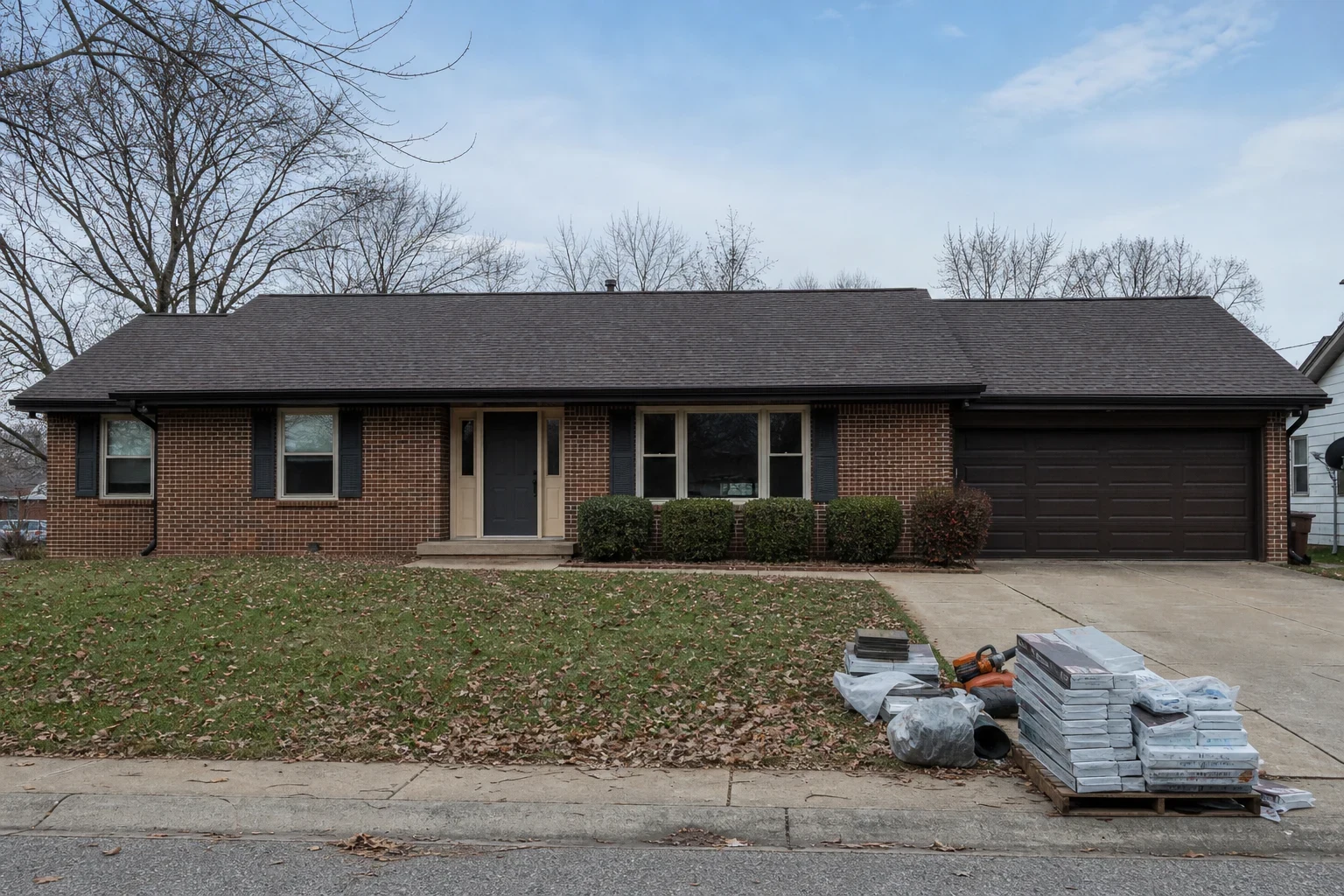
We will check every slope, show you the photos and separate storm damage from wear. Then you will have a written estimate to decide from.